Author: Admin

  • R SIM (Resilient SIM): Transforming Critical IoT Connectivity for the Future

    R SIM (Resilient SIM): Transforming Critical IoT Connectivity for the Future

    In the ever-evolving landscape of the Internet of Things (IoT) and connected devices, the demand for reliable, resilient, and seamless connectivity has never been greater. As we march towards the future, the need for mission-critical applications to maintain uninterrupted communication has become paramount. Enter rSIM, the groundbreaking innovation from the CSL Group, poised to redefine the way we approach connectivity in the digital age.

    Reliable connectivity is essential in many IoT applications today. From healthcare tools to electric vehicle chargers, constant connection saves lives and boosts efficiency. But what if the network goes down? That’s where R SIM steps in to save the day, offering a new way to keep devices connected even during outages.

    As we march towards the future, the need for mission-critical applications to maintain uninterrupted communication has become paramount. Enter rSIM, the groundbreaking innovation from the CSL Group, poised to redefine the way we approach connectivity in the digital age.

    Overcoming the Limitations of Traditional SIM Cards

    Traditionally, SIM cards have been the backbone of mobile connectivity, providing users with access to cellular networks. However, as the world becomes increasingly interconnected, the limitations of traditional SIM cards have become increasingly apparent. Single-network SIMs, roaming SIMs, and even multi-IMSI SIMs have all fallen short in addressing the critical need for uninterrupted connectivity, especially in mission-critical applications.

    The problem lies in the fact that these traditional SIM solutions still rely on a single network, leaving them vulnerable to network outages or disruptions. In a world where downtime is simply not an option, this shortcoming has become a significant barrier to the seamless operation of critical systems and services.

    Understanding Resilient SIM (R SIM): What Is It and How Does It Work?

    What Is R SIM?

    Resilient SIM, or R SIM, is a special type of SIM card that uses two different network profiles from separate countries or providers. Think of it like having two standby power sources for your phone. When one network drops, the R SIM switches to the backup automatically. This switch happens without anyone having to press a button or update software.

    How Does R SIM Operate?

    The secret lies in a tiny, patented program called an applet on the SIM itself. This applet constantly checks if the primary network is working well. If it detects a problem, it instantly switches to the backup network. Most importantly, this process is fully automatic and happens inside the SIM, not the device. That means it works with all kinds of IoT devices, no matter what software they run.

    Industry Standards and Compatibility

    R SIMs follow GSMA standards, which means they comply with industry rules for mobile networks. This makes them easy for network operators to adopt and sell. Because they meet these standards, R SIMs are compatible with most existing networks and can be integrated smoothly into many IoT applications.

    Why R SIM Is a Game Changer for Critical IoT Applications

    Better Uptime and Automatic Failover

    With R SIM, devices stay connected even during network outages. It detects issues and switches to backup immediately. This reduces downtime and ensures essential systems keep running. For example, medical devices can operate safely and reliably, without interruptions.

    Simplifies Device Design and Deployment

    Traditional solutions often need external gadgets or software updates to improve resilience. R SIM avoids this by being built-in, making device design simpler. Installing or replacing an R SIM is all you need to enable automatic switching, saving time and money.

    Opens New Market Opportunities

    R SIM makes it easier to deploy IoT solutions across various sectors. Healthcare, electric vehicle charging stations, smart cities, and industrial automation can all benefit. Network operators also see new ways to extend their services by offering resilient SIM profiles, creating more revenue streams.

    Real-World Applications of R SIM

    The impact of rSIM extends far beyond the realm of connectivity itself, as it has the potential to revolutionize a wide range of critical industries and applications. Let’s explore some of the key use cases where rSIM is poised to make a significant difference:

    Healthcare

    In the healthcare sector, where lives are on the line, reliable connectivity is of the utmost importance. Medical devices, remote patient monitoring systems, and telemedicine applications all rely on uninterrupted communication to deliver life-saving care. With rSIM, healthcare providers can ensure that these critical systems remain operational, even in the face of network disruptions, allowing them to focus on what matters most – patient well-being.

    Energy and Utilities

    The energy and utilities industries are the backbone of modern society, powering our homes, businesses, and infrastructure. Maintaining the reliable operation of these systems is paramount, and rSIM plays a crucial role in ensuring that critical components, such as smart meters, grid monitoring sensors, and remote control systems, remain connected and functional, even during network outages.

    Transportation

    In the transportation sector, connectivity is essential for the smooth operation of intelligent transportation systems, fleet management, and autonomous vehicles. rSIM’s ability to provide uninterrupted connectivity helps to ensure the safety and efficiency of these systems, enabling real-time data exchange, remote diagnostics, and seamless communication between vehicles, infrastructure, and control centers.

    R SIM

    Industrial Automation

    The industrial sector has been at the forefront of the IoT revolution, with a growing reliance on connected devices and systems to drive efficiency, productivity, and quality control. rSIM’s resilient connectivity solution is a game-changer in this space, enabling the reliable operation of industrial automation systems, predictive maintenance, and remote monitoring, even in the face of network disruptions.

    Partnering for Success

    The success of rSIM lies not only in its innovative technology but also in the strategic partnerships that the CSL Group has forged with leading network operators and service providers. By working closely with these industry leaders, the CSL Group has ensured that rSIM is fully integrated and compatible with existing network infrastructure, making it a seamless and scalable solution for a wide range of customers.

    These partnerships also allow the CSL Group to leverage the expertise and resources of its network partners, ensuring that rSIM is continuously updated, optimized, and supported to meet the evolving needs of the market. This collaborative approach not only benefits the end-users but also strengthens the overall ecosystem, driving innovation and progress in the world of critical connectivity.

    How R SIM Stands Out

    Unique Technology and Patented Features

    What makes R SIM special is its built-in applet that constantly tests the connection. No other SIM on the market uses this combination of dual profiles and smart testing, making R SIM a unique solution.

    Strong Network Partnerships

    CSL Brun works closely with network providers to develop standards-based profiles. This collaboration ensures security, compatibility, and a clear path for adoption. It’s a win for everyone involved, especially customers.

    Competitive Edge

    R SIM is the only solution that combines industry standards with dual profiles for resilience. It’s flexible, scalable, and ready for widespread IoT deployment, giving it a clear advantage over traditional SIMs that rely on software or external devices.

    Practical Tips for Using R SIM in Your Projects

    How to Get Started

    • Identify the critical devices that need reliable connectivity.
    • Work with network providers to select suitable profiles.
    • Test R SIMs in your environment to ensure seamless operation.

    Making the Most of R SIM

    • Keep monitoring network performance to spot issues early.
    • Choose profiles from trusted providers for better security.
    • Plan for scalable deployment to expand your IoT network easily.

    Looking Ahead: The Future of IoT Connectivity

    As IoT grows, so does the need for stable, fail-safe communication. Standards-based solutions like R SIM will play a bigger role in keeping systems online. Expect more innovative features to emerge, making IoT devices smarter and more reliable.

    Conclusion

    R SIM from CSL Brun is revolutionizing how IoT devices stay connected during critical moments. Its built-in automation, industry standards, and compatibility open up new possibilities for industries that need uninterrupted operation. This solution is more than just a SIM card — it’s a new way to secure the future of critical IoT applications.

    If you want your IoT deployments to be future-proof, exploring resilient SIM options like R SIM is a smart move. Reliable connectivity isn’t just a feature anymore — it’s the backbone of modern, safe, and efficient IoT systems.


  • Private APN vs. Public APN: Why Businesses Need Dedicated Mobile Connectivity

    Private APN vs. Public APN: Why Businesses Need Dedicated Mobile Connectivity

    Why a Private APN Is Better Than a Public One

    When it comes to mobile connectivity, not all APNs (Access Point Names) are created equal. Many businesses and organizations now prefer private APNs over public ones—and for good reason. Here’s why choosing a private APN can make a big difference.

    What’s the Difference?

    Public APN: The default gateway used by most mobile users to access the internet. It’s shared among millions of users.

    Private APN: A dedicated gateway set up for a specific organization or group of users, offering more control and security.

    Key Benefits of a Private APN

    Enhanced Security
    A private APN creates a closed network between your SIM-enabled devices and your internal systems, keeping sensitive data off the public internet.

    Better Control
    You can define who accesses your network and how, allowing for custom policies, device restrictions, and tighter traffic management.

    Reliable Performance
    Private APNs reduce network congestion by isolating your traffic from the public network, improving speed and reliability—especially important for IoT and critical business applications.

    Custom IP Addressing
    Private APNs allow static or private IP assignments, making it easier to track, manage, and secure connected devices.

    Integration with Corporate Networks
    They can be connected directly to your internal infrastructure via VPN or leased line, enabling seamless access to business systems and cloud platforms.

    Ideal Use Cases

    • Enterprise mobility solutions

    • Industrial IoT (Internet of Things) deployments

    • Remote workforce connectivity

    • Secure field operations

    In short, if your business relies on secure, reliable mobile data, a private APN is not just a nice-to-have—it’s a strategic asset. It’s the key to better control, security, and performance in an increasingly mobile world.


    How to Add an APN on Your Hardware or Mobile Device

    If you’re having trouble connecting to mobile data or sending MMS messages, your device may not have the correct APN (Access Point Name) settings. APNs are essential for your phone to connect to your carrier’s network properly. Here’s a quick guide to manually adding an APN on your device.

    What Is an APN?

    An Access Point Name (APN) is the gateway between your mobile network and the internet. Without the correct APN settings, your device may not be able to access mobile data, send MMS, or even use some network features.

    How to Add an APN

    For Android Devices:

    1. Open Settings.

    2. Tap Network & Internet or Connections, depending on your device.

    3. Select Mobile Network > Access Point Names.

    4. Tap the + icon or Add.

    5. Enter the APN settings provided by your carrier.

    6. Tap the three-dot menu (if available) and choose Save.

    7. Select the newly created APN to activate it.

    For iPhone (iOS):

    1. Go to Settings.

    2. Tap Cellular > Cellular Data Options > Cellular Network.

    3. Fill in the APN fields with the details from your carrier.

    4. Press the back arrow to save. The settings are saved automatically.

    Where to Get APN Settings

    You will find your carrier’s APN settings from the order process or by contacting customer support. Some hardware & phones will also update APN settings automatically when you insert a SIM card.

    Final Tips

    • Restart your device after adding or updating an APN.

    • Double-check for typos; APN settings are case-sensitive.

    • If mobile data still doesn’t work, try resetting to default and re-entering the settings.

  • IoT Connectivity for VoLTE (Voice over LTE) Door Entry Systems, GSM Intercoms & Elevator Solutions

    IoT Connectivity for VoLTE (Voice over LTE) Door Entry Systems, GSM Intercoms & Elevator Solutions

    Enhancing Security and Convenience

    In today’s rapidly evolving technological landscape, the integration of the Internet of Things (IoT) into everyday systems is becoming increasingly essential. One area where this connectivity is making significant strides is in security and communication solutions, particularly in VoLTE (Voice over Long-Term Evolution) door entry systems, GSM intercoms, and elevator voice gateways. These innovations are not just transforming the way we interact with our environments but also enhancing safety, convenience, and operational efficiency.

    The Rise of VoLTE Door Entry Systems

    VoLTE technology enables high-definition voice calls over 4G LTE networks, providing superior sound quality compared to traditional cellular services. In the realm of door entry systems, VoLTE enhances security and user experience significantly.

    Benefits of VoLTE Door Entry Systems:

    1. Real-Time Communication: With VoLTE, users can communicate with visitors instantly and with better audio clarity, ensuring that conversations are conducted smoothly and effectively.

    2. Enhanced Security Features: Integration with IoT allows for features such as remote monitoring and control of entry points via smartphones or web applications. Users can view live video feeds and grant access to guests from anywhere, ensuring greater security.

    3. Integration with Smart Home Devices: VoLTE door entry systems can connect with other smart home devices, enabling features such as automatic unlocking when the homeowner approaches or alerting them to unauthorized access.

    GSM Intercoms: A Reliable Communication Solution

    GSM intercom systems leverage mobile networks to provide reliable communication, making them an excellent choice for residential and commercial installations alike. These systems are particularly beneficial in areas where traditional landlines may be impractical or unavailable.

    Advantages of GSM Intercoms:

    1. Wide Coverage: GSM intercoms can be deployed in remote locations since they rely on cellular networks, making them suitable for construction sites, warehouses, and rural areas.

    2. Scalability: Installation and expansion of GSM intercom systems are straightforward, allowing businesses to adapt their communication solutions as needs grow.

    3. Wireless Connectivity: Without the need for cumbersome wiring, GSM intercoms reduce installation times and costs while offering flexibility in system design.

    Elevator Voice Gateways: Seamless Communication and Safety

    Elevator voice gateways facilitate two-way communication between passengers and emergency responders during critical situations. Implementing IoT technology into these gateways enhances functionality and safety measures.

    Key Features of IoT-Enabled Elevator Voice Gateways:

    1. Emergency Communication: Equipped with IoT connectivity, voice gateways can automatically report incidents to emergency services, ensuring rapid response times and increased passenger safety.

    2. Remote Monitoring: Building managers can monitor elevator systems and diagnose issues in real-time, minimizing downtime and maintenance costs.

    3. Integration with Building Management Systems: Voice gateways can integrate with broader building management systems, allowing for coordinated responses to emergencies and improved operational efficiency.

    The Future of IoT Connectivity in Security Solutions

    The incorporation of IoT connectivity in VoLTE door entry systems, GSM intercoms, and elevator voice gateways not only enhances user experience but also strengthens security measures across various environments. As technology continues to evolve, we can anticipate even more innovative features and capabilities to emerge:

    • AI-Driven Insights: Machine learning algorithms could analyze usage patterns to improve system responses and predict maintenance needs.

    • Enhanced User Interfaces: With advances in user experience design, settings can be adjusted via intuitive mobile applications for greater convenience.

    • Interoperability: Future systems will likely see improved interoperability among devices, enhancing their collective functionality across different environments.

    Conclusion

    Incorporating IoT connectivity in VoLTE door entry systems, GSM intercoms, and elevator voice gateways marks a significant step toward making our living, working, and transit spaces more secure, convenient, and efficient. As these technologies continue to evolve, they promise to provide an unparalleled level of service and safety that keeps pace with the demands of modern society. Embracing these innovations will not only streamline operations but also foster a more connected and secure environment for everyone.


    This blog highlights the integration of IoT in relevant security systems while emphasizing their practical benefits. If you have specific topics or advanced features you’d like to explore further, feel free to ask!

  • Why Zero Trust Security is the Future

    Why Zero Trust Security is the Future

    In today’s rapidly evolving digital landscape, where cyber threats are more sophisticated than ever, organizations must adopt robust security frameworks to protect sensitive data. The Zero Trust Security model emerges as a leading paradigm, emphasizing the principle of “never trust, always verify.” This approach is particularly vital in the context of remote work, where traditional network perimeters have dissolved. Ivanti’s multi-faceted VPN solution offers a comprehensive approach to secure remote access, providing organizations with the tools they need to safeguard their networks effectively.

    However, as businesses increasingly rely on VPN technologies, they must also be aware of the associated security risks. VPN vulnerabilities can expose organizations to cyberattacks, making it imperative to implement stringent security measures. This article delves into the intricacies of Zero Trust Security, explores Ivanti’s innovative VPN solution, and highlights the critical security risks that organizations must navigate in their quest for robust cybersecurity.

    For numerous organizations relying on outdated security technologies, the announcement acted as a tangible reminder of certain fundamental realities regarding VPN security threats that specialists have been discussing for some time now.

    • VPNs give too many people too much access to too much of an enterprise network. 
    • Zero trust solutions solve many of the problems associated with VPNs. 
    • Alternatives to VPN for IoT and other types of remote network access should be implemented sooner, not later. 

    What makes security threats so widespread in extensively distributed corporate networks?

    Most organizations continue to rely on one of the two following methods for securing access to private resources within distributed enterprise networks:

    Security through concealment approaches the ridiculous.

    Employing static IP addresses along with port forwarding techniques has been a prevalent approach for concealing connected devices and applications on the local area network (LAN) that are located behind a router in a remote branch store or office.

    Concealing your presence might be an option, but it is no longer a wise, lasting fix. Fixed IP addresses make your vulnerabilities visible on the internet. Cybercriminals are innovative and skilled at employing advanced techniques to probe and breach systems that are accessible via a public static IP. Moreover, they are continually improving their tactics.

    When a server or resource is breached, hackers can “move laterally” to gain access to additional resources, jeopardizing the security of the entire enterprise network.

    Additionally, every static IP incurs a cost, which can quickly add up as a business grows its network of connected locations, vehicles, and IoT devices. Overseeing all these static IPs can also be difficult. It requires significant effort and is susceptible to mistakes made by humans (consider the meticulous, extensive spreadsheets that a team member must update by hand).

    Legacy VPN technology may be outdated, but it shouldn’t be overlooked

    Legacy VPN technologies like DMVPN have effectively safeguarded distributed enterprise networks for quite some time. They have performed admirably and merit recognition for their long-standing contributions to private networks. However, it is time to phase out these legacy VPNs.

    The unrestricted access typically offered by VPNs translates to complete network entry. Traditional VPN technology is often compared to a moat encircling a fortress. If this barrier is compromised, the entire area and everything within it can be exposed. This analogy highlights the significant consequences of breaches that happen when hackers penetrate a perimeter-based VPN, granting them free rein over private assets. Furthermore, improperly set up VPNs or complicated VPN configurations can create security weaknesses.

    Conventional VPNs also pose considerable operational difficulties for businesses. Organizations with extensive distribution encounter a significant hurdle because they need separate static IP addresses for resources at every location.

    Now, regarding the extensive attack surface… The Ivanti case serves as a clear example. In December 2023, several zero-day vulnerabilities targeted Ivanti’s VPN offerings, with attackers engaging in widespread scanning for susceptible devices and possible automated exploitation.

    Now, regarding the extensive attack surface… The Ivanti case serves as a clear example. In December 2023, several zero-day vulnerabilities targeted Ivanti’s VPN offerings, with attackers engaging in widespread scanning for susceptible devices and possible automated exploitation.

    • Credential Theft: The hackers introduced a specialized JavaScript malware known as WARPWIRE into a user login page to obtain and extract unencrypted credentials.
    • Lateral Movement: The attackers progressed laterally by utilizing stolen credentials to access internal systems through RDP, SMB, and SSH.

    In summary, VPNs were unable to thwart the advanced techniques employed by these hackers.

    Why is zero trust a superior choice compared to VPN?

    Alright, we’ve concluded that it’s crucial to look for alternatives to VPNs. So, what is the top alternative to a VPN? Zero trust security solutions have surfaced as the most effective choice for several reasons:

    Zero trust minimizes the attack surface. By enabling only inside-out connections and effectively concealing internal resources, zero trust networking makes these resources invisible to the internet.

    Zero trust inhibits lateral movement. It is founded on the premise that no user or system, regardless of whether they are within or outside the network, should be granted automatic trust. This approach seeks to reduce the likelihood of lateral movement, where an intruder, once inside a network, tries to navigate sideways to access additional systems or sensitive information. Instead of providing blanket access to the entire network, zero trust establishes connections between users and devices with particular IT resources on a case-by-case basis. It upholds the principle of least privilege, ensuring that users and systems have access solely to the resources and information necessary for their functions. This limitation helps to diminish the potential consequences of a compromised account on lateral movement.

    Zero trust defends against zero-day vulnerabilities. The zero trust framework includes ongoing monitoring and verification by analyzing all traffic in real-time, effectively blocking zero-day attacks, malware, and other sophisticated threats. Additionally, it implements continuous authentication and authorization procedures, ensuring that users and devices are consistently validated during their sessions using contextual data.

    How Cradlepoint assists decentralized businesses in safely evolving their network

    Cradlepoint offers a variety of solutions that allow businesses to shift their networks to a zero trust framework.

    Secure Connect: NCX Secure Connect enables organizations to create extensive distributed networks effortlessly while maintaining a zero trust connectivity model.

    ZTNA: By implementing a zero trust network through Secure Connect, organizations can utilize a ZTNA solution to safely provide detailed access to remote staff and external contractors. ZTNA incorporates continuous authentication and authorization procedures, allowing for precise, adaptable, and robust policies determined by user characteristics and situational context.

    Hybrid Mesh Firewall: Cloud-based hybrid mesh firewalls conduct ongoing monitoring of in-line traffic through IDS/IPS, successfully stopping zero-day vulnerabilities.

    Remote Browser Isolation: To safeguard users and devices against internet-based zero-day vulnerabilities, Cradlepoint provides a Remote Browser Isolation (RBI) service. RBI establishes a digital air gap by utilizing a remote container environment. When a user selects a link, all web content—encompassing sites opened via email—is processed within an isolated, virtual browser that operates in the cloud, separate from the user’s device or network. This approach effectively shields users and devices from zero-day threats.

    Conclusion

    By leveraging Zero Trust Security this can be your secret weapon against hackers. By embracing this innovative solution you can stay ahead of the competition, ensuring your business remains safe and thriving in every moment.  Find out more by contacting us today!

  • Cellular Solutions to Prevent Downtime

    Cellular Solutions to Prevent Downtime

    Network Resilience in today’s fast-paced business environment is a must, as downtime can spell disaster, leading to lost revenue and frustrated customers. But with the advent of 5G technology, you have the power to transform your operations and safeguard against costly interruptions. Imagine seamless connectivity that enhances communication, boosts productivity, and ensures your systems run smoothly.

    Whether you’re managing bustling retail spaces or dynamic office environments, leveraging 5G can be your secret weapon against unexpected outages. Embrace this innovative solution and stay ahead of the competition, ensuring your business remains resilient and thriving in every moment!

    Using 5G IoT Solutions to prevent any expensive downtime

    Discover how to seamlessly incorporate cellular broadband to enhance resilience and ensure continuous uptime in your offices, retail spaces, and other fixed locations.

    Network outages can create significant turmoil for businesses, leading to operational interruptions, decreased efficiency, and possible financial losses. As numerous organizations rely on cloud storage and utilize a growing array of cloud services, dependable wide-area network (WAN) connectivity becomes essential—just a brief disruption can result in extensive repercussions.

    Establishing a plan for WAN failover can reduce these risks by ensuring a smooth and automatic switch to backup connectivity when the main link is disrupted. Implementing 5G and LTE for network redundancy and failover in various locations such as stores and offices allows organizations to enhance uptime, boost application performance, and maintain business continuity. If network interruptions are affecting your operations, it’s time to seek the appropriate failover solution for your organization.

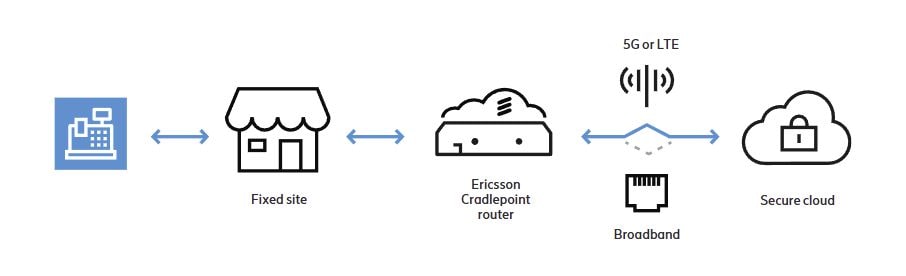
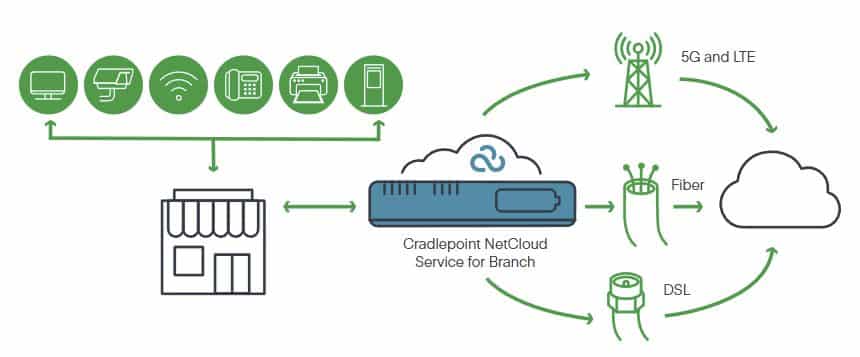
    Link diversity: By utilizing an Ericsson Cradlepoint 5G or LTE adapter as a backup for your main router, any interruptions in wired connections will trigger a smooth and automatic switch to cellular broadband, ensuring your organization’s essential data and applications remain accessible.

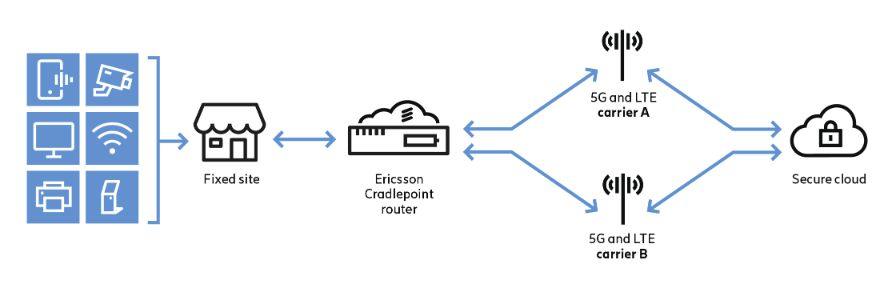
    Dual-carrier failover: An Ericsson Cradlepoint hybrid WAN router equipped with dual cellular modems enhances network reliability by facilitating automatic switching between two separate network providers.

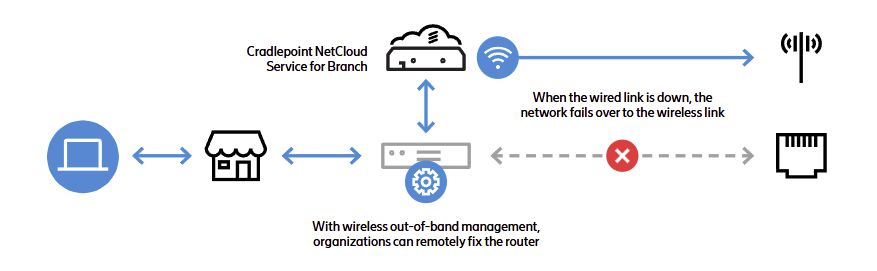
    Out-of-band management (OOBM): By utilizing an Ericsson Cradlepoint 5G or LTE adapter to support a main router, the IT team retains remote access and oversight of the primary router along with the devices linked to the LAN.

    Hardware redundancy with VRRP: When two Ericsson Cradlepoint hybrid WAN routers are linked together, the Virtual Router Redundancy Protocol (VRRP) facilitates automatic failover, routing, and all other network operations if the main router fails.

    Protection against network spikes: Ericsson Cradlepoint routers equipped with SD-WAN capabilities direct various types of data over distinct connections according to established guidelines.

    Cellular as primary connectivity in fixed sites

    Organizations that have numerous current and upcoming sites, like retail outlets and dining establishments, require prompt network access that can be rapidly implemented and replicated globally. They can conserve both time and costs by completely avoiding wired connections; however, this necessitates a different kind of WAN link that offers sufficient reliability and performance to accommodate an entire location.

    Utilizing an Ericsson Cradlepoint router equipped with SD-WAN capabilities and security measures like zero trust and IDS/IPS—taking advantage of 5G for primary and potentially backup connectivity. Over a wide network of stores, overseeing a limited number of cellular providers instead of numerous regionally focused ISPs results in significant time and cost savings.

    Network Resilience: ericsson 5g failover routers

    Reasons and methods for utilizing cellular technology in stationary sites

    Cellular goes where wires can’t: Rural areas or newly developed regions might lack access to fiber, T1 lines, or other wired connections, resulting in pockets of disconnection even within urban and suburban areas. Networks that prioritize cellular or rely solely on wireless technology offer broad coverage and connectivity through advanced 5G and LTE networks. Companies can benefit from WAN link diversity by utilizing Ericsson Cradlepoint hybrid WAN routers, which accommodate multiple modems and carriers. If one carrier experiences a signal loss or decreased performance, another can automatically take over, ensuring seamless wireless-to-wireless WAN failover.

    Connect on day 1 and avoid delays: Wired networks necessitate careful planning and implementation, often leading to delays as companies and their staff await delayed installation services. In contrast, wireless connectivity via an Ericsson Cradlepoint router allows businesses to adapt, shift, and grow quickly. Instead of enduring the expenses and setup associated with cable installations, 5G and LTE networks can be activated immediately upon unboxing.

    Manage performance and security from anywhere: Branch offices do not have in-person IT specialists available. Rather than relying on external truck visits or corporate travel for network modifications and problem-solving, streamlined IT teams utilize Ericsson NetCloud Manager to enable, oversee, and diagnose hundreds of wireless routers from a unified interface—encompassing SD-WAN and enhanced security measures.

    Pop-up connectivity for temporary locations

    Temporary locations enable organizations to engage with customers and conduct business in creative ways, including seasonal shops, tax preparation offices, election polling sites, and emergency response tents. However, wired internet access is frequently either unavailable or prohibitively costly for these pop-up scenarios.

    Utilize Ericsson’s enterprise wireless offerings — including cellular routers equipped with scalable security features like zero trust networking and hybrid mesh firewall — to quickly establish cellular connections as the main WAN link at temporary sites, particularly in scenarios where wired connectivity is prohibitively costly or unreliable.

    Network Resilience: popup sites using 5g routers

    Key factors for pop-up networks at temporary sites

    On-demand connectivity and security anywhere: Organizations can quickly establish adaptable and secure cellular WAN connections and deploy Wi-Fi on demand using plug-and-play cellular routers, eliminating the need for IT personnel to be present on-site. The flexibility of cellular technology enables businesses to relocate their temporary solutions as required, while scalable security measures can be modified at any moment.

    Ensure predictable costs, no matter the area: Utilizing mobile connectivity for temporary networking standardizes wide area network (WAN) expenses nationwide, allowing reliance on one or two network carriers rather than needing a separate wired internet service provider in each city.

    Zero-touch deployment with centralized management; Ericsson’s offerings feature zero-touch deployment, as every router is registered in Ericsson NetCloud prior to shipment. This allows organizations to establish pop-up connectivity swiftly and without the need to dispatch an IT expert to the location. After deployment, the oversight and administration of all connection and security settings can be managed remotely via NetCloud Manager.

    Cellular failover and out-of-band management

    Gartner approximates that each hour of internet outage results in an average loss of $300,000 for enterprise organizations. Such downtime can bring business operations to a standstill by disrupting access to essential devices and applications, including point of sale systems, inventory management, data storage, and communication tools.

    Harness the power of an Ericsson Cradlepoint adapter or router to enhance the reliability of your primary wired router located in a fixed position. This innovative solution not only offers cellular failover but also enables seamless wireless out-of-band management. With smart policies in place, traffic can swiftly reroute through the wireless connection whenever the primary wired link faces interruptions. When the wired connection is back online, the traffic flow effortlessly resumes to normal — often without users or customers even realizing it. 

    Benefitting from cellular failover and out-of-band management

    Seamless automatic cellular failover: While traditional wired failover relies on the same last-mile trenches and backhaul routes, a Wireless WAN connection opens up exciting new possibilities by utilizing diverse air pathways. This innovative approach enables policies to swiftly route traffic over a 5G or LTE link at a moment’s notice. With automatic failover and WAN redundancy, you can enjoy dependable uptime for networks where constant connectivity is essential. 

    Remote visibility into primary hardware failure: By establishing a direct link from the adapter’s console port to the main router, administrators gain the ability to access the router wirelessly, regardless of whether the IP and Ethernet are operational. This innovative approach allows for efficient remote troubleshooting, eliminating the need for costly truck rolls or sluggish, expensive POTS lines.

    Manage and monitor connections from anywhere: Rather than depending on external visits or business travel for network repairs, streamlined IT teams can utilize Ericsson NetCloud Manager to enable, oversee, and diagnose routers and adapters. These remote management features are consolidated into one interface, ensuring connections remain active and minimizing the workload for staff.

    Cellular for day-1 connectivity in long-term locations

    Organizations that frequently launch sites with tight timelines—driven by revenue targets and business objectives—often cannot afford to delay the installation of wired connections. They require immediate secure access so that their staff can get ready and operations can start on the scheduled opening day.

    Utilizing Ericsson’s enterprise wireless offerings—comprising cellular-enabled routers and adapters integrated with SD-WAN services—to enhance the effective use of various WAN connections and security measures like zero trust networking and IDS/IPS. This enables you to quickly establish cellular connectivity as the main WAN link at a new or relocated site, particularly during the interim period before wired connections are installed. Once wired connectivity becomes available, you can modify the setup (switching cellular to failover, primary, etc.) as required.

    Key factors for a successful day-1 connectivity solution

    Immediate connectivity through cellular: Ericsson Cradlepoint’s all-in-one routers come with integrated high-performance 5G or LTE modems, removing the necessity to wait for wired connections. These routers create a secure cellular link as the main connection, ensuring immediate connectivity at new sites. Companies can launch on time, free from network-related delays.

    Support of multiple types of WAN and LAN connections: Ericsson’s wireless solutions for enterprises are designed with adaptability as a key focus. The routers accommodate a range of WAN and LAN connection types, such as cellular, wired broadband, fiber, and satellite. This flexibility enables companies to choose the most appropriate option tailored to their unique requirements. The multi-WAN functionalities and SD-WAN capabilities allow organizations to manage network traffic across various WAN connections, ensuring enhanced performance, redundancy, and increased bandwidth.

    Scalable security: With Ericsson NetCloud, companies can enhance their network security by utilizing a unified platform. Organizations can establish a zero trust network by implementing Ericsson NetCloud SASE, which eliminates the need for outdated VPNs by offering perimeterless, “invitation-only” access. Name-based routing minimizes the potential attack surface, while cloud-based orchestration simplifies management. Additionally, incorporating a hybrid mesh firewall with web filtering and IDS/IPS safeguards against online threats.

    Using Secure 5G and SD-WAN Through a Hybrid WAN Solution in Fixed Sites

    In retail locations, workplaces, and various permanent sites, the ongoing introduction of IoT devices, remote employees, cloud applications, and direct Internet connectivity has heightened the need for dependable and flexible networks. Companies frequently require branch routers capable of utilizing various WAN and LAN resources, offering enhanced network security and performance capabilities than ever before.

    Benefits of hybrid WAN solutions

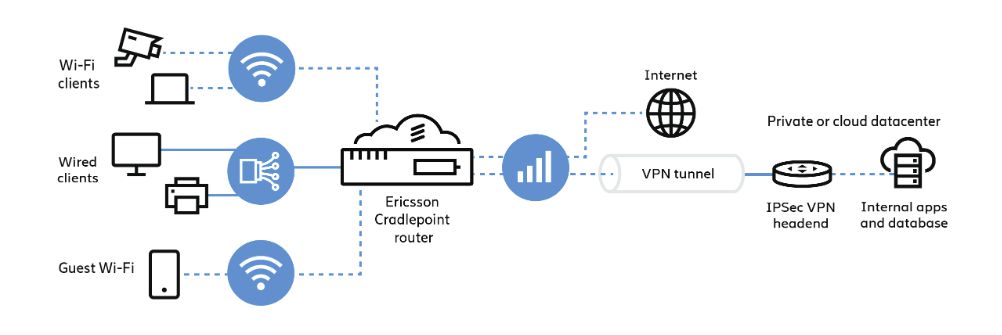
    Multiple WAN and LAN options through one solution: Cradlepoint’s comprehensive hybrid WAN routers harness the capabilities of 5G and LTE—featuring compatibility with several modems and service providers—while also delivering Wi-Fi, accommodating wired connections, and enabling Bluetooth support.
    Built-in layers of network security: Cradlepoint’s hybrid WAN offerings for stationary locations include a zone-focused and application-sensitive firewall, along with content filtering and intrusion prevention/detection systems (IPS/IDS). Additionally, they provide supplementary services such as zero trust networking. These solutions allow web, SaaS, and cloud traffic to connect straight to the Internet without requiring extra devices or management systems.
    SD-WAN features for better application uptime and performance: Implementing business policies to automate route selection and enhance network traffic is essential for companies that cannot tolerate disruptions in specific applications caused by inconsistent signal strength or increased latency.
    Centralized control of network connectivity and security at many sites:  When managing extensive locations, IT teams utilize Cradlepoint NetCloud Manager to centrally oversee, control, and resolve issues related to network availability and performance, as well as data protection—resulting in savings of up to hundreds of thousands of dollars in time and costs annually.

    Conclusion

    By leveraging 5G IoT Solutions this can be your secret weapon against unexpected outages. By embracing this innovative solution you can stay ahead of the competition, ensuring your business remains resilient and thriving in every moment.  Find out more by contacting us today!

  • MWC 2025: Cisco Stand Tour IoT Connectivity Solutions

    MWC 2025: Cisco Stand Tour IoT Connectivity Solutions

    Exploring the Cisco IoT Connectivity Solutions at MWC Barcelona 2025

    At the Mobile World Congress (MWC) Barcelona 2025, Cisco was prominently featured as a significant player in the Internet of Things (IoT) connectivity landscape. This article explores the exciting innovations presented at the Cisco stand, particularly its IoT Connectivity Platform tailored for Mobile Virtual Network Operators (MVNOs).

    Overview of Cisco’s IoT Connectivity Platform

    Cisco’s IoT Connectivity Platform has a strong reputation in the industry, and for good reason. As one of the progenitors in IoT connectivity, Cisco has consistently provided reliable solutions that equip MVNOs with essential tools for data management and connectivity.

    Key Features of the IoT Connectivity Platform

    During the exploration of Cisco’s offerings, several essential features stood out:

    • Network Insights: The platform gives real-time insights into the network to which each SIM card is connected. This is invaluable for companies that need to monitor connectivity and service health closely.
    • Session Tracking: Operators can easily track session initiation times, granting visibility on how long sessions last, which is crucial for efficiency and resource management.
    • Data Monitoring: Cisco’s platform provides a comprehensive overview of data consumption, ensuring that MVNOs can manage billing and resource allocation effectively.
    • Global Activation: One of the standout advantages of Cisco’s IoT platform is the ability to activate or deactivate SIM cards instantaneously anywhere in the world. This level of control is essential for companies with international operations and diverse customer bases.

    Challenges and Opportunities in MVNO Billing

    While the point about the efficiency of Cisco’s solutions was clear, one feedback from the representatives at the stand highlighted a crucial area that requires improvement: the billing automation process for MVNOs.

    Need for Improved Billing Automation

    MVNOs often face challenges with downstream billing automation. The current systems can be cumbersome, leading to inefficiencies in billing practices for end customers. Automating this process not only saves time but also enhances customer satisfaction by providing accurate and timely billing information.

    • Efficiency Gains: By automating billing processes, MVNOs can redirect focus toward customer service and innovation rather than administrative tasks.
    • Enhanced Customer Experience: A smooth billing experience can significantly improve customer satisfaction, leading to better retention and loyalty.

    Conclusion

    Cisco’s presence at MWC Barcelona 2025 not only reaffirms its commitment to IoT connectivity for MVNOs but also sheds light on the ongoing developments in the realm of data management and customer service automation. The featured IoT Connectivity Platform is robust and reliable, with features that highlight Cisco’s pioneering role in the IoT space.

    Moving forward, addressing the billing automation issues will be critical for MVNOs to maximize operational efficiency and enhance customer experiences. The future looks promising for IoT applications, especially with technology leaders like Cisco at the helm.

    For those looking to enhance their IoT capabilities and explore advanced connectivity solutions, it’s worthwhile to stay updated with developments from Cisco and consider implementing their technologies in your network solutions.

    If you’re exploring ways to integrate IoT more effectively into your operations, this is the time to act. Discover how advancements in IoT technology can transform not just your connectivity, but your overall customer engagement strategies.

    Learn more about IoT Platform solutions today!

  • Ericsson Stand Tour Showing AI and 5G powered

    Ericsson Stand Tour Showing AI and 5G powered

    Transforming Business with AI and 5G: Insights from Ericsson at MWC 2025

    The Mobile World Congress (MWC) 2025 in Barcelona features ground breaking developments in technology, with Ericsson leading the charge in showcasing how AI and 5G are transforming industries. As one of the biggest players in cellular connectivity, Ericsson’s presence at the event highlights its commitment to driving enterprise transformation and improving service capabilities for carriers and businesses alike. This article explores the innovative solutions Ericsson presented and their significance for modern enterprises.

    Ericsson’s Role in the Global Telecom Landscape

    Ericsson is a recognized leader in the field of IoT and cellular connectivity, providing over 50% of the world’s infrastructure outside of China. The company’s enterprise business is crucial, enabling carriers to monetize their network investments while showcasing transformative solutions for industries ranging from healthcare to manufacturing.

    Key Innovations Showcased at MWC 2025

    At their stand, Ericsson unveiled a multitude of innovative projects that demonstrate how businesses can leverage 5G and AI for operational improvements. Here are some of the key initiatives:

    1. Connecting Enterprises to Public Cellular Networks

    By utilizing public cellular networks, Ericsson allows enterprises to access flexibility beyond traditional connectivity options. One notable demonstration involved a mobile “Network on Wheels,” which showcased a car running multiple applications simultaneously. This application of IoT emphasizes secure connections, critical for industries like automotive, where data security is paramount.

    Benefits of Public Cellular Networks:

    • Enhanced flexibility compared to conventional network options.
    • Instant scalability for various applications.
    • Secure data transmissions crucial for IoT devices.

    2. Leveraging Network APIs for Enhanced Applications

    Ericsson presented its robust Network APIs that utilize data from telecommunications networks to optimize business applications. For instance, a feature demonstrated included enabling a smartphone to unlock a building by assessing various parameters such as SIM status and location validity. This innovation enhances security and user experience in business applications.

    3. Deployment of Private 5G Networks

    One of the more striking applications of Ericsson’s technology involves the deployment of private 5G networks within enterprises. A notable case study was the collaboration with Jaguar Land Rover, which highlighted the challenges traditional Wi-Fi and wired connections pose. By employing private 5G, businesses can enjoy efficient connectivity in environments where conventional systems fall short, such as factories and airports.

    Advantages of Private 5G Networks:

    • Reliable connectivity in challenging environments.
    • Improved efficiency in data handling and application performance.
    • Tailored solutions to meet specific enterprise needs and obstacles.

    4. Enhancing Building Connectivity and Emergency Services

    Another focus of the Ericsson presentation included solving connectivity issues in modern buildings characterized by low-energy glass and dense infrastructure. As many buildings today face challenges with cellular signal penetration, Ericsson’s solutions aim to ensure seamless access to emergency services and empower users to avoid cumbersome Wi-Fi logins.

    Key Innovations for Building Connectivity:

    • Incorporation of carrier signals for improved in-building experiences.
    • Comparison analysis showing performance differentials between legacy systems and modern 5G setups.
    • Solutions designed to ensure that vital services remain operational even in network-distracting environments.

    The Future of 5G in Enterprise Transformations

    The transformative potential of 5G in improving business operations is monumental, and Ericsson is at the forefront of this change. By addressing traditional limitations in connectivity and providing advanced AI-driven solutions, Ericsson helps organizations embark on their digital transformation journeys.

    Why Businesses Should Embrace these Innovations

    1. Cost Efficiency: By adopting new technologies, companies can significantly reduce operational costs, as shown in healthcare examples where computer vision minimizes inventory costs.
    2. Enhanced Productivity: Efficient and reliable connectivity fosters improved productivity among employees, facilitating smoother workflows.
    3. Innovation Enablement: The adoption of cutting-edge AI and 5G technologies can drive innovative product and service offerings, opening new revenue streams.

    Conclusion

    Ericsson’s presence at MWC 2025 underlines the company’s dedication to transforming industries through AI and 5G capabilities. The solutions presented provide a roadmap for enterprises looking to navigate the complexities of modern connectivity and digital transformation. Whether it’s through enhancing public cellular networks, private 5G deployments, or using advanced network APIs, Ericsson is committed to helping businesses thrive in this new era of technology.

    Explore these innovative developments and see how integrating AI and 5G can revolutionize your business processes for a more competitive edge in your industry. Ready to embrace the future of connectivity?

    Learn more about how to implement these solutions today!

  • #MWC25 Huawei Stand Tour

    #MWC25 Huawei Stand Tour

    Exploring the Huawei Stand at MWC Barcelona 2025: A Gateway to the Intelligent World

    MWC25 Huawei Stand Tour in Barcelona 2025 is poised to redefine technological innovation and connectivity, and at the heart of this grand event lies the Huawei Stand. Known for its impressive showcases in mobile technology and connectivity solutions, Huawei’s presence at MWC is nothing short of spectacular. This article explores the highlights of the Huawei stand and what attendees can expect while walking through this innovative exhibition.

    A Grand Welcome to the Huawei Stand

    Upon entering Hall One, visitors are greeted by a visually stunning display that captures the essence of Huawei’s commitment to accelerating the intelligent world. The stand not only stands out for its size but also for its intricate designs and the sheer number of innovative solutions featured throughout its vast space.

    Showcasing Connectivity Innovations

    At the Huawei stand, attendees can explore a diverse range of connectivity products that are transforming industries like:

    • Public Service: Understanding how smart connectivity solutions can improve efficiency and services in public sectors.
    • Manufacturing: Displaying advancements in automation and control through connectivity, which enhances manufacturing processes.
    • Retail: Highlighting smart retail technologies that improve customer engagement and operational efficiency.

    This breadth of technology makes it clear that Huawei is not just a telecommunications giant but a forward-thinking company that spans numerous sectors.

    The Scale of the Operation

    One of the most striking features of the Huawei stand is its massive scale. Organizing such an extensive exhibition takes significant planning and manpower. In the mornings, attendees can witness busloads of staff arriving, all dedicated to maintaining the stand’s operations. These meticulous preparations are crucial for displaying the latest technologies and providing unrivaled customer service at MWC.

    Staff Expertise and Cultural Representation

    The presence of knowledgeable staff is paramount to the success of the exhibition. Visitors will find a team wearing traditional attire, offering a cultural touch that enhances the overall experience. This blend of modern technology with cultural elements reflects Huawei’s commitment to not only showcasing their products but also their values and heritage.

    Meeting Rooms and Networking Opportunities

    A notable aspect of the Huawei stand is the presence of numerous meeting rooms designed for focused discussions. These spaces allow industry leaders and potential clients to dive deeper into the different technologies that Huawei provides. Whether it’s smart city solutions or advancements in telecommunications, there is an opportunity for tailored conversations that can drive future collaborations.

    Importance of Personal Interactions

    In today’s digital age, the value of face-to-face meetings cannot be overstated. MWC offers a unique opportunity for industry players to connect personally, fostering relationships that can lead to innovative partnerships. The Huawei stand serves as a hub for these connections, facilitating discussions that can shape the future of technology.

    Conclusion

    The Huawei stand at MWC Barcelona 2025 is not merely an exhibition space; it is a testament to what the future holds for connectivity and technology. With its impressive scale, innovative solutions, and cultural representation, Huawei continues to push boundaries and redefine possibilities in the tech world. For anyone attending MWC, a visit to the Huawei stand is essential, promising insights and showcases that captivate and inspire.

    Ready to witness the future of technology? Immerse yourself in the innovations at MWC 2025 and discover how Huawei is shaping the intelligent world. Don’t miss this opportunity to engage with industry leaders and explore ground breaking solutions!  Find out more about IoT Connectivity Solution here.

  • Best of MWC 2025 Barcelona Walking Tour

    Best of MWC 2025 Barcelona Walking Tour

    Explore the Future of Mobile Technology

    MWC 2025 Barcelona Walking Tour, join us on an exhilarating walking tour of MWC 2025, the world’s premier mobile technology event, held in the vibrant city of Barcelona! This year’s Mobile World Congress is bigger and bolder than ever, showcasing groundbreaking innovations and futuristic connectivity solutions that are set to revolutionize the way we live and interact with technology.

    In this video, we’ll take you on a guided journey through the bustling halls of the event, where you’ll get an insider’s look at the latest advancements in mobile technology. From 5G networks to the Internet of Things (IoT), MWC 2025 is the place where industry leaders and innovators come together to unveil cutting-edge products and ideas. Experience first hand the excitement as we walk through exhibits featuring the hottest trends, from augmented reality to artificial intelligence.

    Whether you’re a tech enthusiast, a business professional, or just curious about what’s next in mobile technology, this tour will provide you with an exclusive glimpse into the future. Hit that subscribe button!

    Don’t forget to like, comment, and share your thoughts on your favorite innovations from the event! What are you most excited about in the world of mobile technology? Let us know in the comments below!

  • London EV Show

    London EV Show

    London EV Show Visit EV ChargerBot by M2M Data Connect 

    Date: 26-28 November 2024
    Stand Number: EP4
    Event Location: ExCel London
    Country/City: United Kingdom
    URL: Londonevshow.com

    M2M Data Connect Group will be exhibiting at the London EV Show in November.

    Get ready for an electrifying experience at the London EV Show 2024! This incredible event will take place on a sprawling 18,000+ sqm expo floor at ExCel London, bringing together the brightest minds in the EV industry to showcase the latest models, cutting-edge electrification technologies, and groundbreaking products and solutions to an enthusiastic audience of over 15,000 attendees. With multiple test drive tracks and live product demonstrations, this 3-day exhibition is your chance to dive into the future of electric vehicles. From sleek electric cars to versatile light vehicles, robust electric trucks and vans, advanced charging infrastructure, innovative battery systems, and even electric aircraft and boats, the London EV Show 2024 promises to spotlight everything electric! Don’t miss this amazing opportunity to see what the future holds for the EV industry!

    Held on 26-28 November 2024 at ExCel London, United Kingdom. The three-day event is the UK’s largest electric vehicle tradeshow, gathering stakeholders from the entire EV ecosystem to showcase all the latest offerings

    Join us at booth EP4 to learn more about our EV ChargerBot. Simplify your booking and payment process using WhatsApp Automation. Bring your own Payment Gateway solution. White Label Chatbot Platform with your domain, your colours, your logo and your control. M2M products and more.


    EV ChargerBot Nominated for the Innovation Award: London EV Awards 2024

    M2M Data Connect is pleased to announce that its EV ChargerBot has been nominated for the Innovation Award at this years show, read more…

    Innovation Award at the LEV Awards