Manchester, UK – In a bold step toward smarter, more accessible EV infrastructure, Unity5, the creators of the Zatpark enforcement platform, have announced a strategic integration with M2M Data Connect to introduce WhatsApp-based EV charging and parking management.
This collaboration brings together Unity5’s powerful enforcement technology and M2M’s cutting-edge omnichannel platform to deliver a seamless, user-friendly experience for EV drivers and parking operators alike.
Revolutionising EV Charging with WhatsApp
At the heart of this innovation is the M2M WhatsApp EV Charger Bot, a solution that allows drivers to book, pay, and manage EV charging sessions directly through WhatsApp. Powered by AI and integrated with Zatpark’s enforcement ecosystem, this bot simplifies the entire charging process—from locating a bay to completing payment—without the need for additional apps or hardware.
Key features include:
Real-time booking and payment via WhatsApp
Integration with Apple Pay, Google Pay, and custom payment gateways
Advanced Bookings; Users can book in advance using site ID
Dynamic Pricing; Operators can offer discounted pricing in quiet hours
Solving Real-World Challenges in EV Bay Management
Using WhatsApp to pay for EV charging solves key challenges in the sector by making access fast, simple, and universal. Drivers no longer need to download apps or create accounts-just scan, chat, and charge using a familiar platform. Payments are seamless via Apple Pay, Google Pay, or card, and real-time updates keep users informed.
For operators, WhatsApp enables automated enforcement, reduces support overhead, and improves bay management. It’s scalable, secure, and ideal for smaller or remote sites. By streamlining the user experience and cutting infrastructure costs, WhatsApp is transforming EV charging into a more inclusive and efficient service.
A Future-Ready Partnership
This partnership reflects a shared commitment to innovation, accessibility, and sustainability. By merging Unity5’s enforcement expertise with M2M Data Connects omnichannel communication tools, the companies are setting a new standard for EV charging and parking technology.
“This integration is a game-changer for EV infrastructure,” said a Unity5 spokesperson. “We’re making enforcement smarter and charging simpler-right from your phone.”
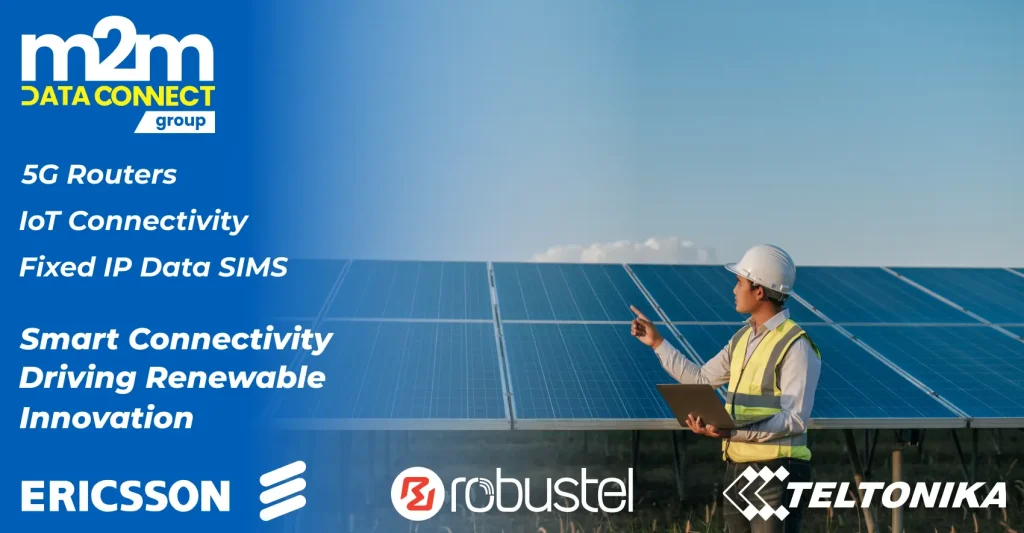
Empowering Solar Farms with Smart IoT Connectivity
As the world accelerates toward a clean energy future, solar farms are playing a pivotal role in meeting global sustainability goals. But with scale comes complexity. Managing vast arrays of solar panels across remote locations requires more than just manpower—it demands intelligence, automation, and real-time insight. That’s where IoT connectivity steps in.
What Is IoT Connectivity in Solar Farms?
IoT (Internet of Things) connectivity refers to the network of smart sensors, devices, and communication systems that collect, transmit, and analyze data from solar farm operations. These systems enable operators to monitor performance, detect issues, and optimize energy output—all in real time.
This data is transmitted to cloud-based dashboards, giving operators a live view of system health and performance.
2. Predictive Maintenance
Instead of waiting for equipment to fail, IoT systems use historical and real-time data to predict when components like inverters or panels are likely to degrade. This reduces downtime and maintenance costs.
3. Remote Management
IoT-enabled solar farms can be managed from anywhere. Operators can:
Adjust settings remotely
Receive alerts for anomalies
Schedule maintenance without site visits
This is especially valuable for farms in remote or hard-to-reach areas.
4. Energy Forecasting & Grid Integration
By combining IoT data with weather forecasts and AI models, solar farms can predict energy output and adjust operations accordingly. This helps balance supply with demand and improves integration with the power grid.
5. Security & Safety Monitoring
IoT cameras and motion sensors can detect unauthorized access or physical damage. Environmental sensors can also monitor for fire risks, overheating, or electrical faults.
Connectivity Technologies That Power IoT in Solar Farms
5G: Offers high-speed, low-latency communication for real-time data transmission.
LPWAN (Low Power Wide Area Networks): Technologies like LoRaWAN and NB-IoT are ideal for transmitting small amounts of data over long distances with minimal power usage.
Edge Computing: Enables local data processing at the device level, reducing the need for constant cloud communication and improving response times.
Sustainability Meets Smart Technology
IoT connectivity doesn’t just make solar farms more efficient—it makes them more sustainable. By optimizing energy output, reducing waste, and minimizing manual intervention, IoT helps solar farms deliver cleaner energy with a smaller environmental footprint.
The Future of Solar Energy Is Connected
As solar technology advances, IoT will become even more integral to its success. From AI-driven analytics to autonomous maintenance drones, the possibilities are vast. For solar farm operators, embracing IoT is no longer optional—it’s essential for staying competitive, sustainable, and future-ready.
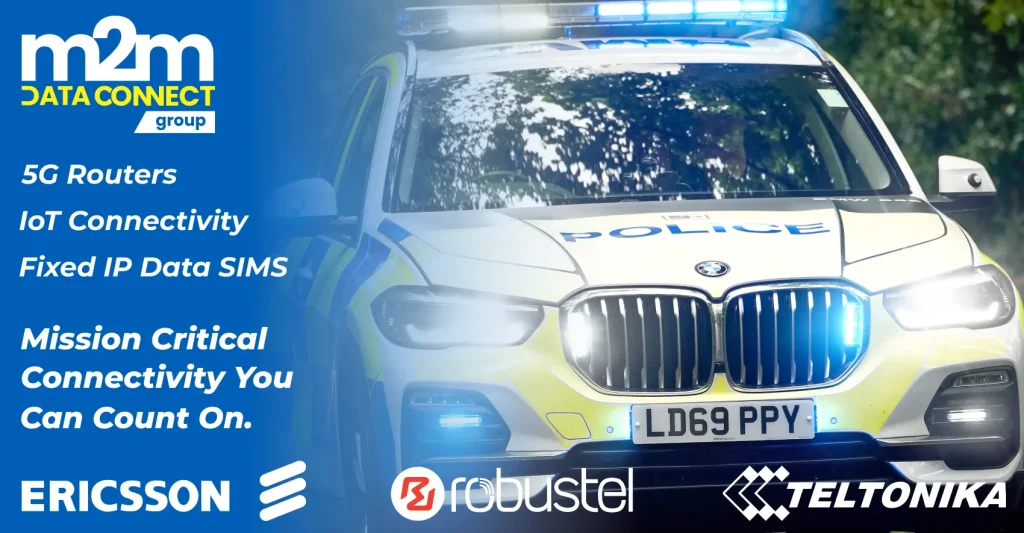
Why IoT Connectivity Is Critical for Emergency Services
In high-stakes situations where every second matters, the Internet of Things (IoT) is revolutionizing emergency services. From reducing response times to enhancing situational awareness, IoT connectivity is becoming a cornerstone of modern emergency response systems. See how IoT can transform your emergency operations – get in touch today.
1. Real-Time Data for Faster Response
IoT devices like connected sensors, GPS trackers, and wearable health monitors provide instantaneous data that can be life-saving. For example:
IoT integration can reduce emergency response times by up to 35%, enabling faster arrival of ambulances, fire trucks, or police units.
Smart traffic systems can automatically adjust signals to clear paths for emergency vehicles.
2. Enhanced Situational Awareness
IoT-enabled drones, surveillance systems, and environmental sensors give responders a 360-degree view of emergencies:
80% of EMS agencies report improved dispatch accuracy with IoT-enabled systems, thanks to real-time geolocation and environmental data.
Sensors in buildings can distinguish between smoke from cooking and an actual fire, ensuring the right units are dispatched.
3. Predictive Analytics and Prevention
IoT allows emergency services to move from reactive to proactive:
Remote asset monitoring is the top IoT use case globally, accounting for 34% of deployments.
Predictive maintenance and health monitoring can prevent equipment failures or medical emergencies before they escalate.
4. Resource Optimization
IoT helps emergency services manage resources more efficiently:
Vehicle fleet management and location tracking are among the top five global IoT use cases, each with over 30% adoption.
Smart inventory systems ensure critical supplies are always available and track usage in real time.
5. Improved Communication and Coordination
IoT enables seamless data sharing across agencies:
Unified dashboards aggregate data from multiple sources—sensors, wearables, vehicles—allowing for coordinated, data-driven responses.
Automated alerts reduce reliance on human reporting, speeding up decision-making.
6. Public Safety and Engagement
IoT empowers citizens and communities:
Smart home devices can automatically alert authorities in case of fire, break-ins, or medical emergencies.
Wearables can detect falls or abnormal vitals and trigger emergency calls without user input.
Key Statistics at a Glance
18 billion IoT devices were in use globally in 2024, projected to reach 20.1 billion in 2025
IoT can improve emergency response times by 30–40% in smart cities
IoT-enabled dispatch systems improve accuracy by up to 80%
IoT connectivity is not just enhancing emergency services, it’s redefining them. With real-time data, predictive insights, and smarter coordination, emergency responders can act faster, safer, and more effectively. As cities and agencies continue to adopt IoT, the future of emergency response looks not only more connected, but more capable of saving lives.
Ericsson & M2M Data Connect Launch Free 30-Day POC Trial for 5G Routers
In a bold move to accelerate digital transformation across industries, Ericsson and M2M Data Connect have announced the launch of a 30-day Proof of Concept (POC) trial—offering businesses the opportunity to test cutting-edge 5G routers and IoT connectivity solutions at no cost.
This initiative is designed to help organizations explore the power of 5G without upfront investment, enabling them to experience firsthand how next-generation connectivity can revolutionize their operations.
What’s Included in the POC Trial?
The 30-day trial gives participating companies access to:
Enterprise-grade 5G routers powered by Ericsson’s advanced technology
Secure, global IoT SIMs from M2M Data Connect
Full technical support throughout the trial period
Real-time analytics and monitoring tools
Zero cost for hardware, connectivity, and support during the trial
Whether you’re in transportation, retail, emergency services, utilities, or remote infrastructure, this POC is tailored to demonstrate how 5G can enhance your connectivity, reliability, and scalability.
Why 5G + IoT?
5G is more than just faster internet—it’s a foundational technology for the future of connected business. When combined with IoT, it enables:
Ultra-low latency for real-time applications
Massive device connectivity across wide areas
High-speed data transfer for video, telemetry, and analytics
Improved network reliability and uptime
This is especially critical for industries that rely on remote monitoring, mobile assets, or mission-critical communications.
Who Should Apply?
This trial is ideal for:
IT and operations leaders exploring 5G for digital transformation
Innovation teams testing new IoT use cases
Organizations with remote or mobile infrastructure
Companies seeking to reduce downtime and improve data visibility
What You Can Expect
During the 30-day trial, participants will be able to:
Deploy 5G routers in real-world environments
Monitor performance and data usage
Evaluate integration with existing systems
Identify cost-saving and efficiency opportunities
At the end of the trial, companies will have a clear understanding of how 5G and IoT can support their strategic goals—without any obligation to purchase.
Ready to Get Started?
This is a limited-time opportunity to explore the future of connectivity—risk-free. If you’re ready to see what 5G can do for your business, contact M2M Data Connect today to register your interest and secure your spot in the trial.
Experience the power of 5G. No cost. No commitment. Just innovation.
Resilient SIM designed for today’s hyper-connected world, ensuring uninterrupted connectivity is paramount, especially for mission-critical applications. Critical devices like medical tools and electric vehicle chargers depend on constant, reliable internet access. When their connectivity fails, it can cause serious problems. The new technology called rSIM offers a better way to keep these devices connected no matter what happens to the network.
As discussed by Hiron, Head of IoT at CSLB, rSIM represents a groundbreaking leap in SIM card innovation, promising resilient, reliable, and automated connectivity solutions that can transform industries such as healthcare, electric vehicle charging, and beyond.
Resilient SIM Understanding the Need for Resilient Connectivity
Connectivity is the backbone of modern IoT (Internet of Things) deployments. Whether it’s medical devices monitoring patient health or EV chargers ensuring vehicles are ready to roll, these systems require constant, uninterrupted network access. Traditional SIM cards, however, have limitations. They typically connect to a single network or rely on roaming agreements, and while multi-profile SIMs exist, they often require manual switching or software updates to maintain connectivity when a network fails.
Resilient SIM (rSIM) steps in to fill a crucial gap. It addresses the fundamental challenge of network outages by offering a seamless, automated fallback mechanism that operates entirely within the SIM itself. This means devices can maintain continuous connectivity even if the primary network experiences downtime.
What is rSIM and How Does It Work?
At its core, rSIM is an intelligent SIM card equipped with a patented applet that resides inside the SIM’s chip. This applet continuously tests the data connection on the primary network profile. If it detects any interruption or degradation in service, it automatically switches over to a secondary profile linked to a different network, often in a different country.
This dual-profile setup is what makes rSIM unique. Unlike conventional SIMs that rely on a single carrier or require manual intervention to switch networks, rSIM’s switching is fully automated, intelligent, and independent of the device’s operating system or software. The SIM itself handles the resilience, enabling it to be device-agnostic. You can simply insert the rSIM into any compatible device, and it will maintain connectivity without the need for additional hardware, software changes, or manual updates.
Key Features of rSIM
Dual Network Profiles: rSIM supports two different network profiles from distinct mobile operators, often across different countries, enhancing redundancy.
Automated Network Monitoring: The embedded applet continuously monitors network quality and data connectivity.
Intelligent Seamless Switching: When the primary network fails or experiences downtime, rSIM automatically switches to the backup profile to maintain service.
Device Agnostic: Works with any device without requiring software modifications or external interventions.
GSMA Standard Compliance: rSIM uses GSMA-approved standards, ensuring compatibility and acceptance by network operators worldwide.
The Impact of rSIM on Critical Industries
One of the most exciting aspects of rSIM technology is its potential to revolutionise industries where connectivity is not just important but critical. Let’s explore a few key sectors where rSIM is making a difference:
Healthcare
In healthcare, many medical devices rely on continuous connectivity to transmit vital data, perform remote monitoring, or enable telemedicine services. Traditionally, ensuring resilience in these devices involved adding external hardware or complex software solutions to manage network switching. This added complexity and cost, and sometimes introduced points of failure.
With rSIM, healthcare devices can embed a single SIM card that guarantees resilient connectivity internally. This simplifies device design, reduces maintenance overhead, and improves reliability. Medical practitioners and patients benefit from uninterrupted data flow, which can be critical for timely interventions and improved patient outcomes.
Electric Vehicle (EV) Charging
The EV charging infrastructure is another prime candidate for rSIM technology. EV chargers require constant, reliable connectivity to manage billing, monitor charging status, and provide real-time updates to users. Any connectivity interruption can cause inconvenience, loss of revenue, or operational challenges.
By incorporating rSIM, EV charging stations gain the ability to maintain connectivity even if the primary mobile network goes down. This ensures that chargers remain operational, payment systems function smoothly, and drivers experience seamless service without interruptions.
Other Critical Applications
Beyond healthcare and EV charging, rSIM’s resilient connectivity benefits extend to numerous other sectors:
Industrial IoT: Manufacturing plants and remote monitoring systems can avoid costly downtime caused by network outages.
Smart Cities: Public safety systems, traffic management, and environmental monitoring devices require continuous data transmission.
Transportation and Logistics: Fleet tracking and predictive maintenance depend on reliable connectivity to optimise operations.
Why rSIM Stands Out in the Market
The mobile connectivity landscape already offers various SIM solutions, including single network SIMs, roaming SIMs, and multi-profile SIMs. So, what sets rSIM apart?
True Automation and Intelligence: Unlike traditional SIMs that require manual switching or software intervention, rSIM’s patented applet autonomously monitors and manages the connection in real-time.
Standardisation and Industry Collaboration: rSIM operates using GSMA-approved standards, which means it enjoys broad acceptance and collaboration with network operators. This compliance ensures that rSIM is not a proprietary or isolated solution but part of a global ecosystem.
Multi-Network and Multi-Country Profiles: By leveraging profiles from different countries and carriers, rSIM provides a level of redundancy and resilience rarely seen in traditional SIM cards.
Device-Agnostic Design: The SIM’s intelligence is embedded within itself, so it can be used in any device without requiring software changes or updates.
Because of these differentiators, network operators are increasingly adopting rSIM technology. They provide their primary profiles to rSIM providers, who then add secondary profiles from other operators. The rSIMs are then distributed back to end customers, creating a resilient connectivity ecosystem that benefits everyone.
The Market Potential and Future of rSIM
The demand for resilient connectivity is growing exponentially as IoT adoption expands and industries become more reliant on uninterrupted data services. rSIM is uniquely positioned to capture this market due to its innovative approach and strong partnerships with network operators.
At industry events like Mobile World Congress, rSIM has generated significant interest from a wide range of stakeholders. Many visitors are familiar with eSIM and iSIM technologies but are often surprised to learn about rSIM and its capabilities. This awareness is growing quickly as more companies seek solutions that guarantee uptime without complicating device design or management.
Looking ahead, rSIM technology is poised to evolve further with enhancements in applet intelligence, expanded network partnerships, and broader adoption across new verticals. As more devices demand always-on connectivity, rSIM offers a scalable, reliable solution that meets the needs of a connected future.
Conclusion: Embracing rSIM for Resilient Connectivity
The future of connectivity lies not just in faster speeds or broader coverage but in resilience—the ability to maintain connections no matter what challenges arise. rSIM delivers on this promise by embedding intelligence directly into the SIM card, enabling automated, seamless switching between networks without user intervention or device modifications.
For industries where connectivity is mission-critical—healthcare, EV charging, industrial IoT, and beyond—rSIM offers a transformative solution that simplifies device design, reduces operational risks, and enhances user experiences. Its compliance with GSMA standards and collaboration with network operators worldwide further solidify its position as a leading resilient connectivity solution.
If you’re exploring ways to future-proof your IoT deployments or critical connectivity applications, rSIM is a technology worth considering. It represents a smart, automated, and reliable approach to connectivity that will keep your devices online, no matter what.
“The key thing around this is it’s all automated and intelligent and done on the SIM itself… you can put the SIM into any device and it will have resilience built in at the SIM itself.” — Hiron, Head of IoT at CSLB
RSIM offers a smarter way to keep critical devices connected at all times. Its automatic switching, based on trusted standards, makes outages less likely. By choosing RSIM, industries can improve safety, efficiency, and user experience. Future infrastructure depends on dependable connections—rSIM leads the way. Adopting this technology means you’re ready for the challenges of tomorrow’s connected world.
IoT eSIM Security Certification from GSMA’s first win by 1oT is a major milestone. They are the first company in Europe to get GSMA SGP.32 certification for their IoT eSIM solution. This certification shows 1oT’s commitment to security and quality in the growing world of IoT connectivity. And interoperability requirements, making it a reliable choice for businesses looking to deploy IoT devices at scale.
IoT eSIM Security Increasing Demand
With the increasing demand for secure and efficient connectivity in various sectors, including automotive, healthcare, and smart cities, 1oT’s certified eSIM solution is poised to facilitate seamless global connectivity while safeguarding data integrity. 1oT’s certification is expected to attract new clients and partnerships, allowing them to expand their offerings and further enhance their service capabilities.
What is 1oT?
1oT is a global cellular connectivity provider for IoT device makers (OEMs). The company belongs to Mobi Solutions Group and was founded in 2016. The core of 1oT’s founders consists of Märt Kroodo, who has a financial background and was the former board member of Click & Grow, and Marko Peterson, a long-standing technical partner of Mobi Solutions. In addition, the project is backed by Rain Rannu, the founder of Mobi Solutions who acts as a strategic advisor.
1oT’s headquarter is based in Estonia. They combine deals from many mobile network operators into one platform. This helps companies manage their IoT devices across different networks and countries. 1oT has also developed its own connectivity management platform and eSIM infrastructure. This makes them unique in the industry.
1oT Key Features:
Aggregates multiple mobile network deals into one platform.
Offers a connectivity management platform.
Has its own eSIM infrastructure.
Their platform allows businesses to seamlessly connect, monitor, and control their IoT devices without the hassle of dealing with multiple contracts or service providers. By aggregating various mobile network operators’ offers, 1oT provides a comprehensive solution that enhances flexibility and scalability for enterprises looking to expand their IoT deployments globally.
The integration of eSIM technology further enhances their offerings. As a result, allowing devices to switch between networks without the need for physical SIM cards. This not only simplifies logistics but also reduces costs associated with managing multiple SIMs. With their robust management tools, clients can easily track usage, performance, and connectivity status, ensuring optimal operation of their IoT systems.
Additionally, 1oT emphasizes security and reliability in its connectivity solutions. Their infrastructure is designed to protect sensitive data and ensure uninterrupted service, which is crucial for businesses that rely on real-time data transmission for operations such as smart cities, fleet management, and industrial automation.
By focusing on customer-centric solutions and continuous innovation, 1oT is positioned to meet the evolving needs of businesses in the digital age. Their commitment to simplifying connectivity empowers organizations to leverage the full potential of IoT technology, driving efficiency and growth in an increasingly connected world.
IoT eSIM Security GSMA SGP.32 Certification
IoT eSIM security GSMA SGP.32 certification is a standard for security in eSIM technology. It makes sure that companies that provide eSIM services meet strict security requirements. This is very important for IoT devices:
Fleet management
Smart cities
Micromobility
This certification is part of the broader GSMA SGP (Subscription Management Specification) series, which establishes guidelines and best practices for managing subscriptions on embedded SIMs (eSIMs). It covers various aspects, including secure communication protocols, data encryption, and secure key management practices.
Achieving GSMA SGP.32 certification is crucial for eSIM service providers, as it demonstrates their commitment to maintaining high security standards.
Additionally, certified companies can differentiate themselves in a competitive market, showcasing their adherence to industry standards and their ability to provide secure and reliable eSIM solutions. Overall, GSMA SGP.32 certification plays a vital role in the growing ecosystem of eSIM technology, promoting secure and efficient subscription management across various devices and services.
Why is This Important?
This certification is a big step for 1oT and the IoT industry. It means that 1oT’s IoT eSIM solution is ready for the market. It also shows that 1oT is a leader in IoT eSIM technology.
The GSMA SGP.32 Certification is crucial not only for 1oT but for the entire IoT ecosystem as it establishes a standard of quality and security that is essential for the widespread adoption of eSIM technology. This certification ensures that 1oT’s IoT eSIM solution meets rigorous industry benchmarks for interoperability, security, and performance, allowing businesses to deploy IoT devices with confidence.
With this certification, 1oT can assure customers that their eSIM solution is capable of seamless global connectivity, enabling devices to switch networks easily and efficiently. This flexibility is particularly important for industries that rely on real-time data and connectivity, such as logistics, smart cities, and healthcare.
Benefits of GSMA SGP.32 Certification:
Shows commitment to security
Builds trust with customers
Allows 1oT to offer advanced IoT eSIM solutions
In addition, the certification helps to streamline the deployment process for companies looking to implement IoT solutions. With a certified eSIM solution, businesses can reduce the time and resources spent on testing and validation, allowing for quicker time-to-market and faster scaling of IoT initiatives.
Ultimately, the GSMA SGP.32 Certification is a testament to 1oT’s commitment to innovation, quality, and reliability in the IoT space. As the demand for connected devices continues to grow, having a certified eSIM solution will be a key differentiator that sets 1oT apart from competitors and drives the future of IoT connectivity.
1oT’s Global Reach
1oT currently manages 3.5 million SIM cards in 173 countries. These IoT applications include:
Fleet management
Micromobility
Smart cities
Sensors
1oT’s global reach shows that they can provide reliable connectivity solutions for businesses anywhere in the world.
The Future of IoT Connectivity
1oT’s GSMA SGP.32 certification is a sign of the future of IoT connectivity. As more and more devices connect to the internet, security becomes even more important. 1oT is leading the way in providing secure and reliable connectivity solutions for the IoT world.
Want to learn more about how 1oT can help your business with IoT connectivity?Visit their website today.
Conclusion
1oT’s achievement of GSMA SGP.32 certification is a major accomplishment. It shows their dedication to security and innovation in the IoT industry. With their certified IoT eSIM solution, 1oT is ready to help businesses connect their devices securely and reliably around the world. The future looks bright for 1oT as it continues to pave the way for advancements in IoT technology.
Building Smarter Highways with M2M Data Connect and Multi-Network IoT Connectivity
Smart highways are redefining transportation by integrating Machine-to-Machine (M2M) Data Connect and multi-network IoT connectivity to optimize traffic flow, enhance safety, and improve infrastructure efficiency. By utilizing multiple communication channels—cellular, satellite, LoRaWAN, and fiber optics—these highways ensure reliable, scalable, and adaptive data exchange across critical systems.
The Power of M2M Data Connect in Smart Highways
M2M technology enables direct device-to-device communication, allowing infrastructure components such as traffic sensors, smart toll systems, autonomous vehicle networks, and surveillance cameras to interact seamlessly without human intervention.
How Multi-Network IoT Enhances Highway Connectivity
1. Uninterrupted Traffic Management & Monitoring
Smart highways rely on real-time IoT data for dynamic traffic optimization. Multi-network IoT SIM cards ensure continuous connectivity between:
AI-driven traffic control centers
Connected vehicle navigation systems
IoT-powered road sensors monitoring congestion
2. Vehicle-to-Infrastructure (V2I) Communication for Smart Mobility
M2M and multi-network IoT enable vehicles to communicate directly with road infrastructure, supporting:Real-time route optimization based on congestion levels🚦 Adaptive traffic signals that adjust to vehicle densityEmergency response prioritization for faster assistance
3. Smart Tolling & Contactless Payments
With M2M-enabled IoT connectivity, toll systems can seamlessly process transactions across multiple networks, enabling:Automated toll payments without manual intervention🔄 Dynamic pricing models based on real-time traffic conditionsRemote verification via multi-network SIM cards for uninterrupted service
Smart highways feature embedded IoT sensors in roads, bridges, and tunnels that transmit health data via M2M connectivity across multiple networks. This enables predictive maintenance, preventing costly infrastructure failures and improving long-term highway efficiency.
5. AI-Driven Surveillance & Security Optimization
Smart CCTV and traffic enforcement systems leverage multi-network M2M data transmission to:Detect accidents, road hazards, and violations in real time🔄 Seamlessly switch between networks to prevent surveillance blackoutsTransmit alerts instantly to traffic control centers and emergency responders
6. Edge Computing & Cloud Integration for Smart Highway Data Processing
Multi-network IoT connectivity supports edge computing solutions, ensuring real-time highway data processing without relying on a single cloud provider. This reduces latency and enhances high-speed decision-making for autonomous vehicle coordination.
The Future of Connected Highways
As urban mobility advances, M2M and multi-network IoT will drive innovations such as:Fully autonomous vehicle ecosystems🌍 Decentralized AI-powered traffic coordinationEnergy-efficient smart roads with dynamic charging stations
Smart highways are not just roads—they are intelligent transportation hubs, built for a future of seamless mobility, enhanced safety, and optimized urban efficiency.
Explore specific IoT use cases like satellite connectivity, edge AI, or autonomous vehicle integration get in touch today and request a quote
Enhancing CCTV Security Systems with IoT Connectivity and M2M Data Connect.
As security threats grow more sophisticated, traditional CCTV surveillance is evolving into intelligent, proactive monitoring systems powered by IoT connectivity and Machine-to-Machine (M2M) Data Connect. By integrating these technologies, CCTV networks can achieve real-time communication, automated security responses, and uninterrupted operation, even in remote or high-risk areas.
M2M Data Connect ensures that CCTV systems remain connected even when traditional networks fail. This enables seamless communication between security cameras, control centers, and other IoT devices—critical for uninterrupted surveillance in urban, industrial, and remote environments.
How IoT and M2M Connectivity Elevate CCTV Security
1. Uninterrupted Surveillance with Multi-Network Support
M2M connectivity allows CCTV systems to switch between mobile networks, satellite, LoRaWAN, or Wi-Fi to maintain a stable connection at all times. This ensures real-time monitoring, even in areas with poor network coverage or high interference.
2. AI-Driven Threat Detection & Automated Alerts
IoT-powered security cameras analyze footage using AI algorithms to detect suspicious behavior, unauthorized access, or potential threats. When an anomaly is detected, M2M connectivity ensures instant alerts are sent to security teams, mobile devices, or emergency responders, triggering automated security protocols.
3. Predictive Maintenance for Maximum Uptime
IoT sensors within CCTV cameras track hardware health, temperature changes, and connectivity status. M2M-enabled devices transmit this data in real time, allowing predictive maintenance to prevent failures before they occur—ensuring continuous surveillance with minimal downtime.
4. Secure and Scalable Access Control
With M2M Data Connect, security systems can integrate with biometric authentication, keyless access, and remote door controls. IoT-connected cameras verify credentials and trigger automated responses, securing restricted areas while maintaining data integrity and encryption.
5. Energy-Efficient and Sustainable Operations
IoT-enabled CCTV systems can sync with solar-powered cameras, smart grids, and energy-efficient protocols. M2M connectivity optimizes power consumption, ensuring sustainable surveillance without excessive energy use.
The Future of IoT-Connected CCTV with M2M Data Connect
As urban infrastructures and corporate security frameworks continue to evolve, IoT and M2M connectivity will drive autonomous surveillance, AI-powered security analytics, and decentralized monitoring networks.
With seamless connectivity, CCTV systems become more than just cameras—they become intelligent security hubs, capable of real-time decision-making, automated protection, and predictive threat mitigation.
Revolutionizing Connectivity: IoT Solutions for Fixed Public Data SIMs
In an age where connectivity is a cornerstone of efficiency, innovation, and communication, the Internet of Things (IoT) is taking center stage. Among the various components that enable seamless IoT connectivity, dedicated IoT SIM cards SIMs are becoming increasingly important. They provide reliable, cost-effective connectivity for a myriad of applications across diverse sectors, including smart cities, public transportation, and industrial automation. Contact us to explore tailored IoT connectivity solutions for your business.
Understanding Fixed Public Data SIMs
Fixed public data SIMs are specialized SIM cards designed to connect IoT devices to cellular networks. Unlike traditional mobile SIMs used in smartphones, these SIMs are often optimized for data transmission over dedicated networks, ensuring that connected devices can communicate effortlessly.
Key Features of Fixed Public Data SIMs
Wide Coverage: Fixed public data SIMs typically operate over established mobile networks, ensuring broad geographic coverage that extends into urban and rural areas. This makes them suitable for applications requiring consistent connectivity.
High Reliability: With a focus on data transfer rather than voice communication, these SIMs can provide more stable connections, minimizing downtime and maximizing operational efficiency.
Cost-Effective Plans: M2M Data Connect offers tailored pricing plans for dedicated IoT SIM cards SIMs, enabling businesses to choose options that best fit their data usage needs without incurring unnecessary costs.
Scalability: As IoT projects grow, organizations can easily increase their SIM subscriptions, adapting to evolving requirements and expanding their networks with minimal friction.
Applications of Fixed Public Data SIMs
1. Smart City Infrastructure
Fixed public data SIMs play a vital role in smart city applications, enabling the integration of various IoT devices used for traffic management, environmental monitoring, and infrastructure maintenance.
Traffic Management: By connecting sensors that monitor traffic flow and vehicle speeds, cities can optimize traffic light timings, reduce congestion, and improve overall urban mobility.
Environmental Monitoring: Data SIMs can facilitate real-time data collection from air quality sensors, waste management systems, and weather stations, enabling cities to respond quickly to environmental challenges.
2. Public Transportation Systems
In public transportation, fixed public data SIMs are essential for connecting buses, trains, and trams to centralized management systems.
Real-Time Tracking: By using GPS and data SIMs, transit authorities can provide accurate vehicle locations and estimated arrival times for passengers.
Passenger Information Systems: Dedicated IoT SIM cards SIMs enable the transmission of real-time updates to digital signage within stations and vehicles, enhancing the commuter experience with timely and accurate information.
3. Industrial Automation
In manufacturing and industrial settings, static data SIMs SIMs facilitate the seamless communication of machines and systems, ensuring high productivity and efficiency.
Remote Monitoring: Machines equipped with IoT sensors can send data back to centralized monitoring systems, allowing for real-time performance tracking and preventative maintenance alerts.
Supply Chain Management: By connecting assets such as shipping containers and vehicles, businesses can gain insights into their supply chain, optimize logistics, and ensure timely delivery.
The Future of Fixed Public Data SIMs in IoT Connectivity
As we look ahead, the role of fixed public data SIMs in IoT connectivity will only expand. Emerging trends and technologies are set to enhance their capabilities:
5G Integration: As 5G networks become more widespread, static data SIMs SIMs will leverage higher speeds and lower latency, enabling more sophisticated applications and larger data transfers.
Edge Computing: By integrating edge computing solutions, IoT devices connected through fixed public data SIMs can process data closer to the source, reducing response times and improving operational efficiency.
Enhanced Security: With increased connectivity comes a greater need for security. Future solutions will likely include advanced encryption methods and secure transmission protocols to safeguard data integrity.
Conclusion
Fixed public data SIMs are paving the way for a new era of IoT connectivity, providing reliable, efficient, and scalable solutions across various sectors. As companies and municipalities harness the power of these technologies, we can expect to see significant improvements in operational efficiency, service delivery, and user experiences. By embracing dedicated IoT SIM cards SIMs, organizations are not just investing in connectivity; they are building the smart, connected future that modern society demands.
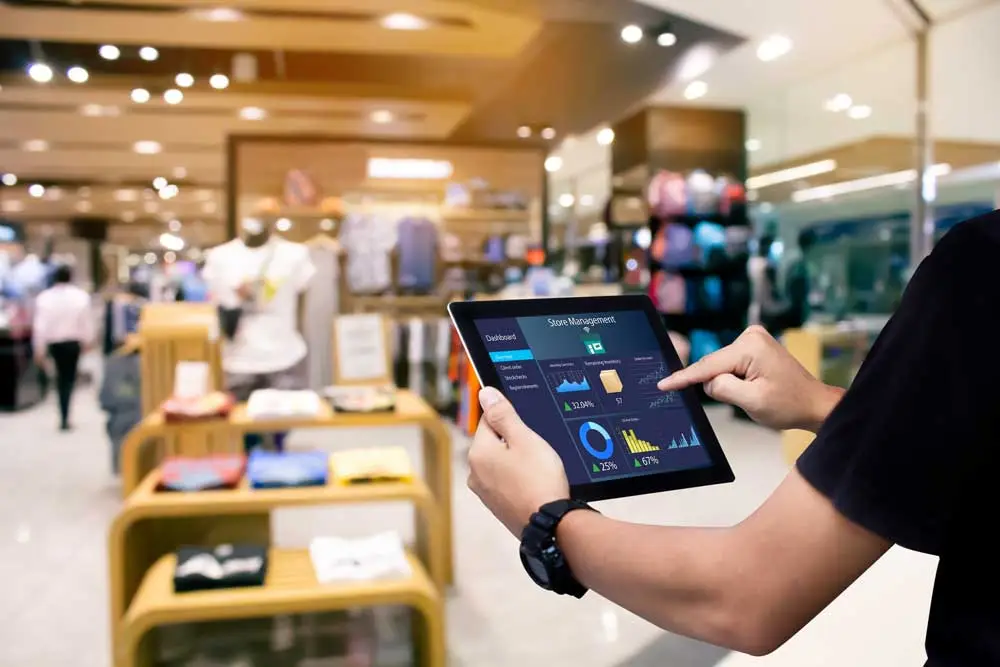
IoT Connectivity for Retail and the Importance of Cellular Networks as a Failover Service
The retail industry increasingly relies on IoT (Internet of Things) connectivity to streamline operations, enhance customer experience, and optimize supply chains. As these interconnected systems become central to daily retail functions, ensuring reliable connectivity is critical. This is where mobile networks play a vital role as an essential failover service.
IoT Connectivity in Retail: An Overview
IoT devices in retail—such as sensors, RFID tags, beacons, and smart shelves—collect and transmit data in real time. This data supports various functions:
Inventory tracking
Customer behavior analysis
Personalized marketing
Operations management
Supply chain visibility
Reliable connectivity ensures these systems operate smoothly, providing uninterrupted insights and automation.
Looking to future-proof your retail IoT setup? Let’s talk about how mobile failover can keep your business connected.
Why Cellular Networks Are an Essential Failover Service
1. Ensuring Continuity of Operations; Retail environments depend heavily on constant data flow. Wi-Fi, Ethernet, or fixed broadband might be disrupted due to technical issues or network outages. Mobile networks (like 4G, 5G) serve as a backup, maintaining communication when primary networks fail, safeguarding essential functions such as inventory updates and transaction processing.
2. Enhancing Network Resilience; Mobile networks are widely available and highly resilient. In case of local connectivity failures—whether due to infrastructure damage, interference, or bandwidth issues—mobile connectivity ensures the IoT system remains operational, avoiding costly downtimes.
3. Support for Remote and Dispersed Locations; Retail chains often have multiple outlets. Mobile networks allow centralized management of IoT devices across various stores, even in remote or temporarily disconnected areas, ensuring consistency and real-time data integration.
4. Scalability and Flexibility; Mobile networks offer flexible bandwidth options that can adapt to changing data needs, such as during peak shopping times or special events, further strengthening the reliability of IoT systems.
5. Security and Data Integrity; Modern mobile networks incorporate advanced security features, helping protect sensitive retail data during failover. This safeguards customer information and proprietary operational data.
For retail businesses leveraging IoT technology, connectivity is the backbone of efficiency and customer satisfaction. Mobile networks provide a critical failsafe—ensuring uninterrupted data flow, operational resilience, and ongoing innovation. Integrating mobile connectivity as a failover safeguard is an essential step toward creating a robust, future-ready retail environment.
Want to make sure your retail systems never skip a beat? Get in touch today to learn how mobile failover can protect your operations from costly downtime.



 What Is IoT Connectivity in Solar Farms?